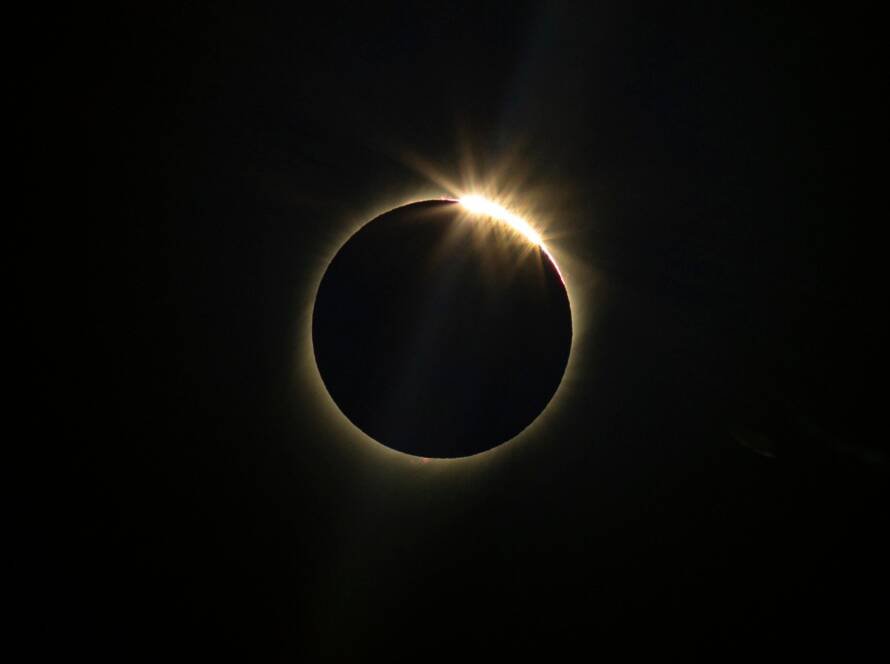
Black holes are among the most mysterious objects in the universe. Because they do not emit light, black holes cannot be observed directly. At RAAVANA, scientists study black holes by analyzing their gravitational influence on nearby stars and surrounding space.
By carefully counting stars and monitoring changes in their motion, brightness, and distribution, researchers can detect black holes that appear to be “missing” or hidden within galaxies.
How Scientists Detect Invisible Black Holes
Since black holes are invisible, astronomers rely on indirect methods such as:
- Stellar Motion Analysis
Stars orbiting an unseen massive object may indicate the presence of a black hole. - Star Counting Techniques
Sudden gaps or unusual star distributions can suggest a black hole has moved or merged. - Gravitational Effects
Unexpected gravitational forces reveal black holes even when no light is detected. - X-ray & Energy Emissions
When black holes consume nearby matter, high-energy radiation helps confirm their location.
Why Black Holes Appear to Go Missing
Black holes may seem to disappear due to several scientific reasons:
- Black Hole Mergers
Two black holes can collide and merge into a single, more massive black hole. - Galactic Movement
Black holes can shift position within galaxies, making them harder to track. - Dormant Black Holes
Some black holes stop absorbing matter and become nearly undetectable. - Limited Observation Data
Incomplete star data can temporarily hide their presence.
Why Counting Stars Matters
Studying star populations around black holes helps scientists:
- Understand galaxy formation and evolution
- Improve gravitational and space-time models
- Support deep-space mission planning
- Enhance satellite navigation and space safety
- Advance fundamental physics research
These studies are essential for long-term space exploration and cosmic mapping..
RAAVANA’s Research Contribution
RAAVANA applies advanced astronomical observation, data modeling, and space-science research to study black holes and stellar systems. By integrating star-counting techniques with aerospace research, RAAVANA supports Sri Lanka’s emergence in advanced astrophysics and space technology.
Our research contributes to global understanding while building local expertise in deep-space science.

Advancing Sri Lanka’s Role in Deep-Space Science
By investigating black holes and stellar behavior, RAAVANA is helping Sri Lanka participate in:
- Cutting-edge astrophysical research
- International space science collaborations
- Future deep-space exploration missions
Understanding black holes today paves the way for Sri Lanka’s discoveries beyond Earth tomorrow.